
Betancuria
A self-guided GPS audio walk through the old capital of Fuerteventura. A village hidden in a mountain valley to escape the pirates, a church that was once a bishop’s seat and the ruins of one of the first convents in the islands, told in your ear right where it all happened.
Betancuria, the version the postcards leave out
Not the glossy shots. The stories even locals walk past without knowing, whispered in your ear on the exact spot they belong to. Here are three. Many more wait inside the tour.
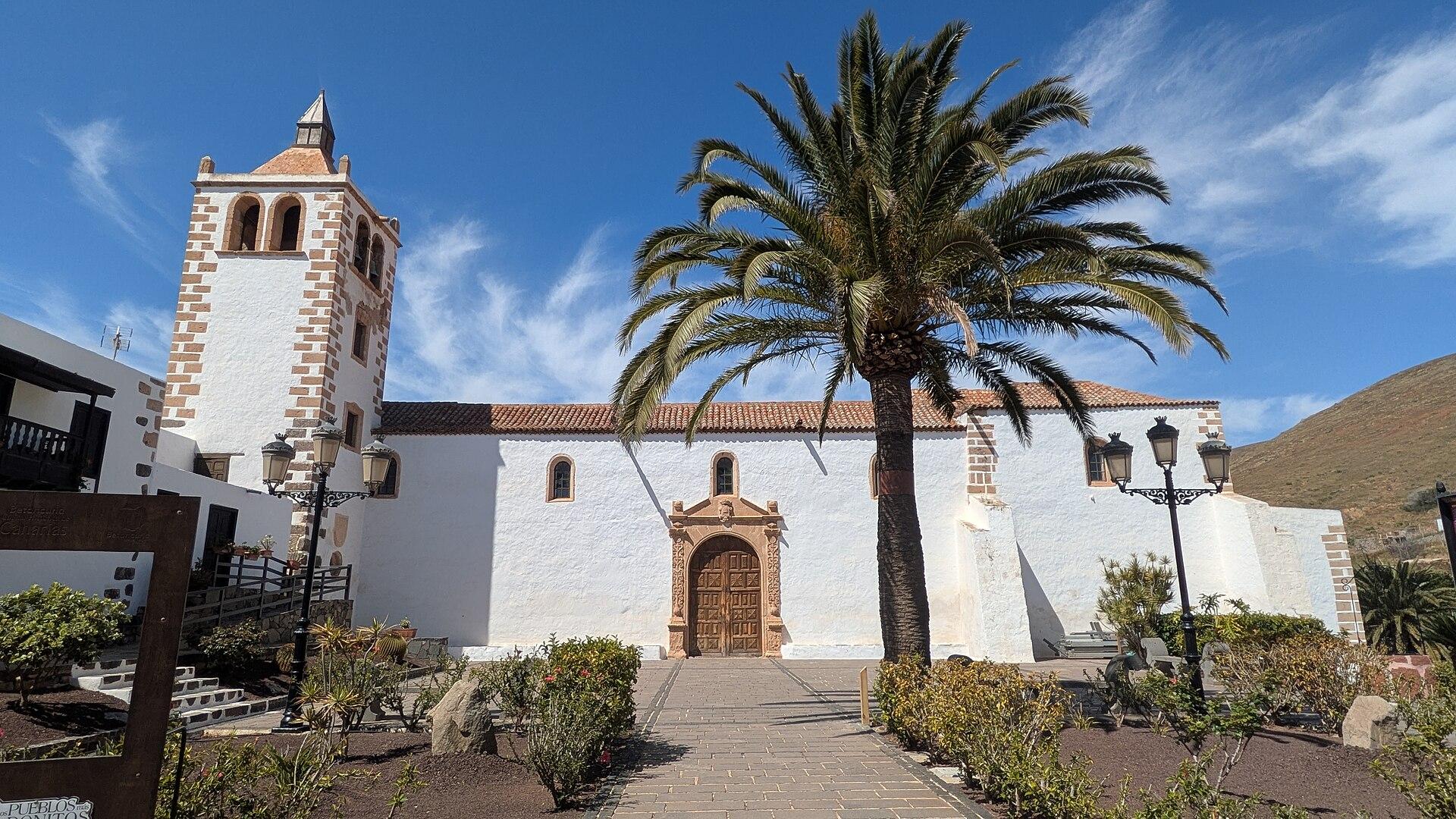
This modest village church once held the seat of a bishopric that governed almost every Canary Island, a role it kept for barely seven years before it vanished.
Full story unlocks in the tour
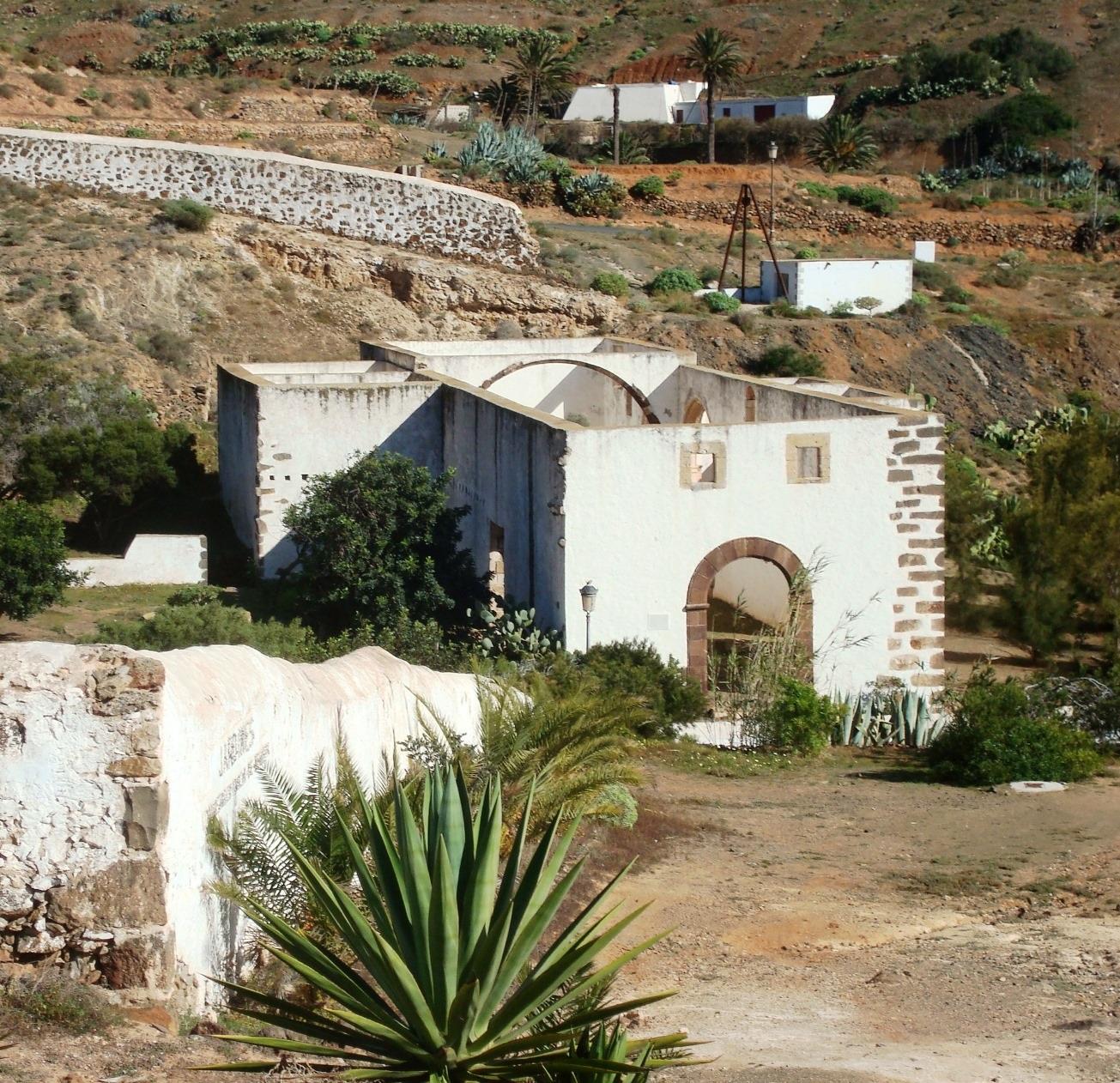
A short walk from the village stand the broken walls of one of the first convents in the Canaries, left roofless after a single brutal night in 1593.
Full story unlocks in the tour
Two giant bronze kings stand alone on a windswept ridge outside the village, the last native rulers of an island that a long stone wall once split in two.
Full story unlocks in the tour
City Pass
Betancuria: self-guided audio tour
Code valid 1 year · 12h once activated · offline
€12
€12 / code
Instant email delivery · activation code generated on purchase
Point your phone, follow the arrow, never get lost
The tour carries an augmented-reality guide. Lift your phone and the camera shows the street ahead with a glowing arrow laid over the real view, always pointing to your next stop. No map to decode, no wrong turns, and like everything here it runs completely offline once you have downloaded it.
- Start any time, any day. No fixed slot, no guide to meet, no queue.
- Native-voice narration in your language, one story unlocking at each stop.
- Download it once and it works fully offline, no roaming, no dead zones.
- A GPS route plus an augmented-reality arrow so you never take a wrong turn.
The story of Betancuria
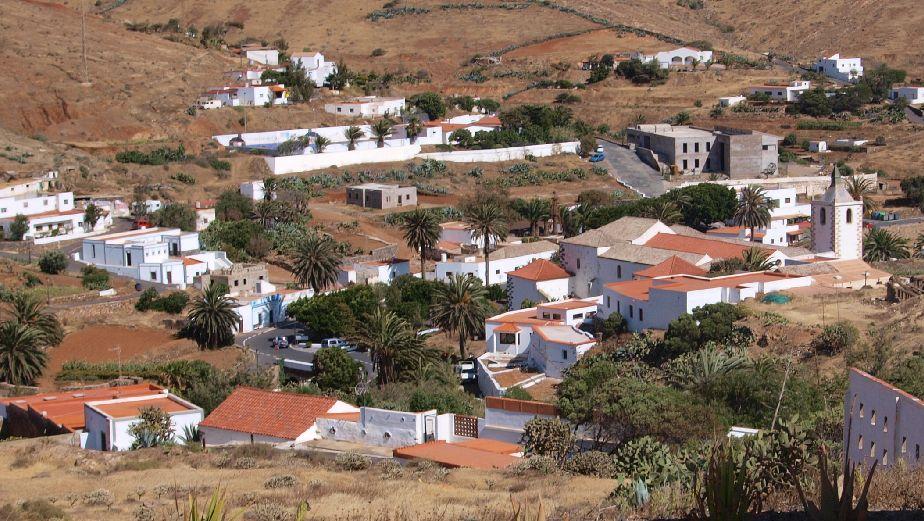
Betancuria is a tiny whitewashed village set deep in a green valley in the mountains of Fuerteventura. For more than four centuries it was the island’s capital, yet today it is the smallest municipality in the whole of the Canary Islands. Palm trees, a handsome old church and quiet lanes make it one of the most picturesque corners of the archipelago.
It was founded in 1404 by the Norman knight Jean de Béthencourt, who gave the place his name. He chose this sheltered inland valley on purpose, for its fresh water and fertile soil, but above all because a hidden site far from the coast offered some protection from the pirates who haunted these waters.
A capital that outran its own defences
The hidden-valley plan never fully worked. European and North African corsairs reached Betancuria more than once, and in 1593 a raid attributed to the corsair Xabán Arráez fell on the town and left it in ruins. The great church of Santa María was sacked and later rebuilt in the seventeenth century, while the convent of San Buenaventura on the edge of the village was left a roofless shell that still stands today.
Despite the raids, Betancuria remained the island’s capital until 1834, when the seat of power moved away to Antigua and later Puerto del Rosario. The village simply stopped growing, which is why its old heart has survived so intact. Its historic centre is protected, and the church, the convent ruins and the little archaeology museum tell the whole story within a short walk.
Kings, cheese and an older island
Long before the conquest, Fuerteventura was home to the Majos, its aboriginal people, and was split into two kingdoms by a long stone wall across the island. Just outside Betancuria, two towering bronze statues honour the last native kings, Guise and Ayose, remembered by tradition as the rulers of the two halves, Guise in the north and Ayose in the south.
The valley around the village is bare, volcanic and grazed by goats, and those goats give Fuerteventura its most famous product: Majorero cheese, the first Spanish goat’s cheese to earn a protected designation of origin. Pair it with gofio, the toasted meal that has been a Canarian staple since aboriginal times, and you taste the island at its most traditional.
What to look out for
Start at the church of Santa María in the heart of the village, then follow the lane to the roofless ruins of the Convento de San Buenaventura and the small hermitage beside it. Visit the archaeology museum for the island’s deep past, and drive up to the Mirador de Guise y Ayose for the two kings and a sweeping view over the valley. Keep an eye out for local Majorero cheese along the way.
Where is Betancuria?
Betancuria lies inland in the mountainous centre-west of Fuerteventura, the most easterly of Spain’s Canary Islands and the closest to the African coast. It is a short, scenic drive from the island’s capital Puerto del Rosario and from the southern resorts.
Three things most visitors never learn
- A capital that hid, and was found anyway. Béthencourt tucked his capital deep in a mountain valley to hide it from raiders. Yet in 1593 corsairs marched inland and sacked it all the same, proving the hidden-valley strategy a costly failure.
- A cathedral that lasted seven years. In 1424 the pope made the village church of Santa María the seat of a bishopric covering almost all the Canary Islands. The bishopric was abolished in 1431, so Betancuria was a cathedral town for barely seven years.
- The smallest town in the Canaries. Once the capital of a whole island, Betancuria is today the least populated municipality in the entire Canary archipelago, home to only a few hundred people, which is exactly why its old heart feels frozen in time.
Betancuria in your language, all 32
Korean, Chinese, Hebrew and 29 more, every stop narrated by a native speaker. One of the widest language choices of any self-guided audio tour.
Get the key to Betancuria
Pick your stops, start walking, and let the voice reveal what everyone else walks straight past.
City Pass
Betancuria: self-guided audio tour
Code valid 1 year · 12h once activated · offline
€12
€12 / code
Instant email delivery · activation code generated on purchase