
Las Palmas de Gran Canaria
A self-guided GPS audio walk through the two old quarters of Gran Canaria’s capital, Vegueta and Triana. The spot where the city was founded, Columbus’s Atlantic stopover and the dogs that gave the islands their name, told in your ear right where it all happened.
Las Palmas, the version the postcards leave out
Not the glossy shots. The stories even locals walk past without knowing, whispered in your ear on the exact spot they belong to. Here are three. Many more wait inside the tour.
Eight dark dogs sit in a row before the cathedral, and nobody is quite sure why. Their secret reaches back to the Roman name for these islands, and it has nothing to do with the little yellow bird.
Full story unlocks in the tour
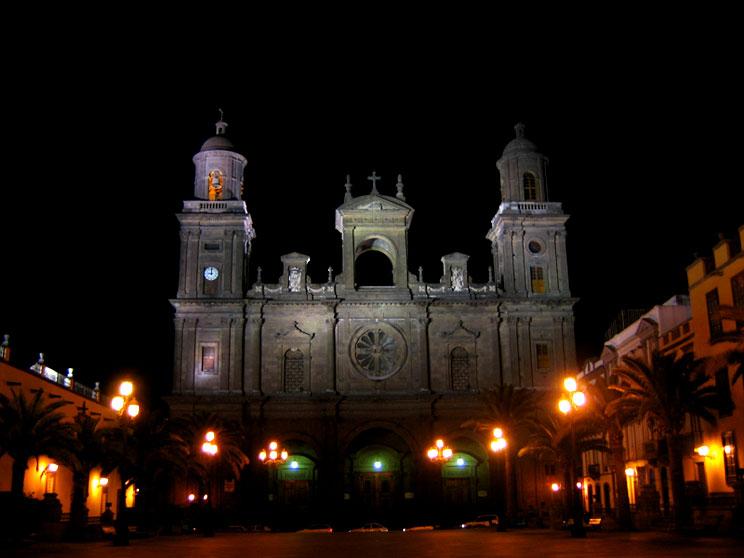
Most visitors photograph the stern stone front and move on. Step inside and the columns fan open above your head like a petrified palm grove, a quiet nod to the city’s own name.
Full story unlocks in the tour
The grand cathedral is not where the city began. That honour belongs to a small, plain chapel nearby, where tradition says a certain sailor prayed before heading west in 1492.
Full story unlocks in the tour
City Pass
Las Palmas de Gran Canaria: self-guided audio tour
Code valid 1 year · 12h once activated · offline
€12
€12 / code
Instant email delivery · activation code generated on purchase
Point your phone, follow the arrow, never get lost
The tour carries an augmented-reality guide. Lift your phone and the camera shows the street ahead with a glowing arrow laid over the real view, always pointing to your next stop. No map to decode, no wrong turns, and like everything here it runs completely offline once you have downloaded it.
- Start any time, any day. No fixed slot, no guide to meet, no queue.
- Native-voice narration in your language, one story unlocking at each stop.
- Download it once and it works fully offline, no roaming, no dead zones.
- A GPS route plus an augmented-reality arrow so you never take a wrong turn.
The story of Las Palmas de Gran Canaria
Las Palmas is the capital of Gran Canaria and the largest city in the Canary Islands. Its historic heart is split in two by the old Guiniguada ravine: Vegueta, the cobbled colonial core where the city was founded, and Triana, the merchants’ and shopping quarter just across the water. Almost everything worth seeing in the old town is within an easy walk.
It began on 24 June 1478, when Juan Rejón came ashore at the mouth of the Guiniguada with a small force and founded the Real de Las Palmas. The conquest of Gran Canaria took about five years of hard fighting before the island was folded into the Crown of Castile in 1483. The San Juan festival each June still marks the founding date.
A rehearsal for the New World
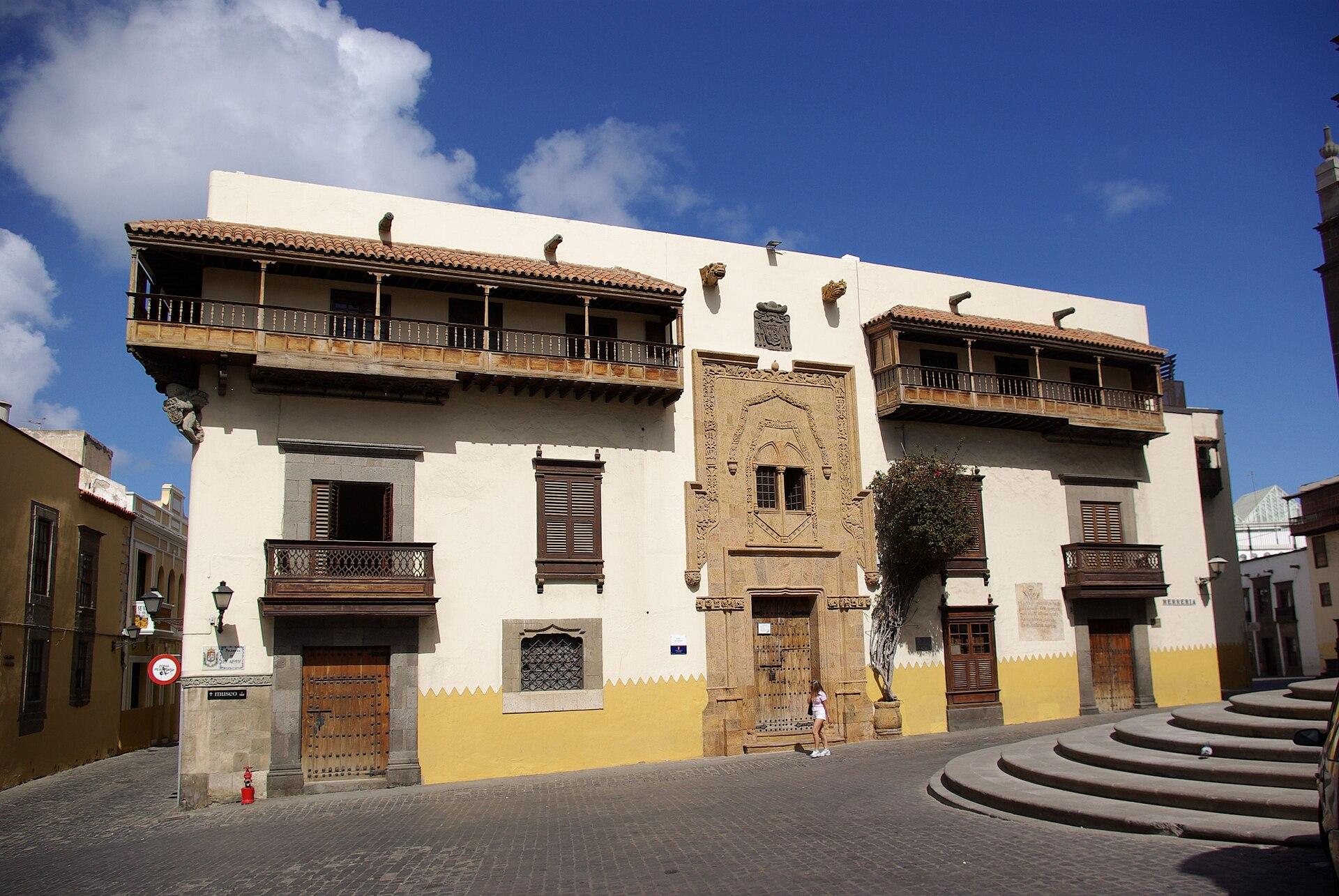
Vegueta was one of the first European towns built on Atlantic soil, and in many ways a rehearsal for the colonial cities Spain would later raise across the Americas. In 1492 Christopher Columbus anchored here to repair the rudder of the Pinta before crossing the ocean, and called again on the way home. The Casa de Colón, on the site of the old governor’s residence, still carries his name.
At the centre stands the Cathedral of Santa Ana, begun around 1500. Its Gothic core was finished by 1570, then given a severe neoclassical stone face in the eighteenth century, so the building you see today is essentially Gothic within and neoclassical without. It was the only cathedral in the Canaries until 1819, and its palm-like interior columns echo the name Las Palmas.
Dogs, writers and raiders
The name Canary Islands most likely comes from the Latin Canariae Insulae, the Islands of the Dogs, after the large dogs early visitors reported here. The famous little canary bird is named after the islands, not the other way round, so the row of dogs before the cathedral is, in a sense, the true origin of the name.
Triana gave Spain one of its greatest novelists, Benito Pérez Galdós, born here in 1843, whose birth house is now a museum. The quarter has also seen its share of danger from the sea: in 1595 Sir Francis Drake was beaten back from these shores, and in 1599 a Dutch fleet under Pieter van der Does burned part of the town before being driven off.
What to look out for
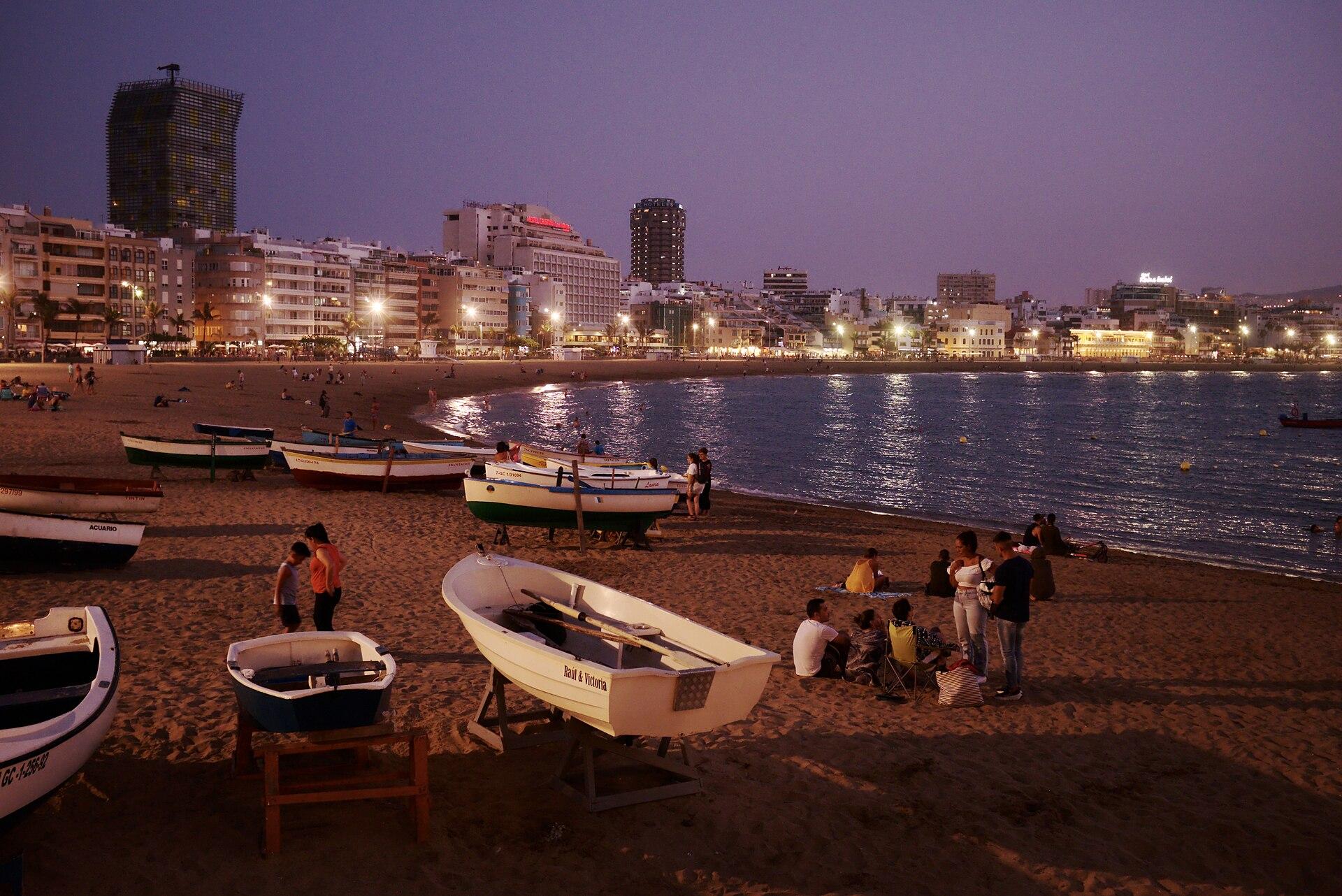
Begin in Vegueta on the Plaza de Santa Ana, between the cathedral and the dogs, then wander the lanes to the Casa de Colón and the Canarian art behind the old façade of the CAAM. Cross into Triana for the Pérez Galdós house and the shops of Calle Triana. When you want sand and sea, the long city beach of Las Canteras, sheltered by its natural reef, lies a short way north.
Where is Las Palmas de Gran Canaria?
Las Palmas sits on the north-east tip of Gran Canaria, a round volcanic island at the centre of Spain’s Canary archipelago, off the north-west coast of Africa. It is the island’s capital and main port, with the old quarters of Vegueta and Triana set just back from the harbour.
Three things most visitors never learn
- The bird is named after the dogs. The canary you picture in a cage takes its name from these islands, which the Romans called the Islands of the Dogs. So the dogs guarding the cathedral are, in a way, the real canaries.
- A cathedral that changed its face. Santa Ana began as a Gothic church around 1500 and was finished inside by 1570, then given an entirely different neoclassical front in the eighteenth century. Walk in and back out and you cross three centuries of changing taste in a single doorway.
- Drake’s run of luck ran out here. The English corsair who had terrorised Spanish ports was repelled from Las Palmas in 1595 by a modest, largely civilian defence. He sailed on to the Caribbean and was dead of disease within months.
Las Palmas in your language, all 32
Korean, Chinese, Hebrew and 29 more, every stop narrated by a native speaker. One of the widest language choices of any self-guided audio tour.
Get the key to Las Palmas
Pick your stops, start walking, and let the voice reveal what everyone else walks straight past.
City Pass
Las Palmas de Gran Canaria: self-guided audio tour
Code valid 1 year · 12h once activated · offline
€12
€12 / code
Instant email delivery · activation code generated on purchase