
Teguise
A self-guided GPS audio walk through the first capital of Lanzarote. A whitewashed inland town named after an aboriginal princess, a pirate castle on a volcano and an alley that remembers a bloody night, told in your ear right where it all happened.
Teguise, the version the postcards leave out
Not the glossy shots. The stories even locals walk past without knowing, whispered in your ear on the exact spot they belong to. Here are three. Many more wait inside the tour.
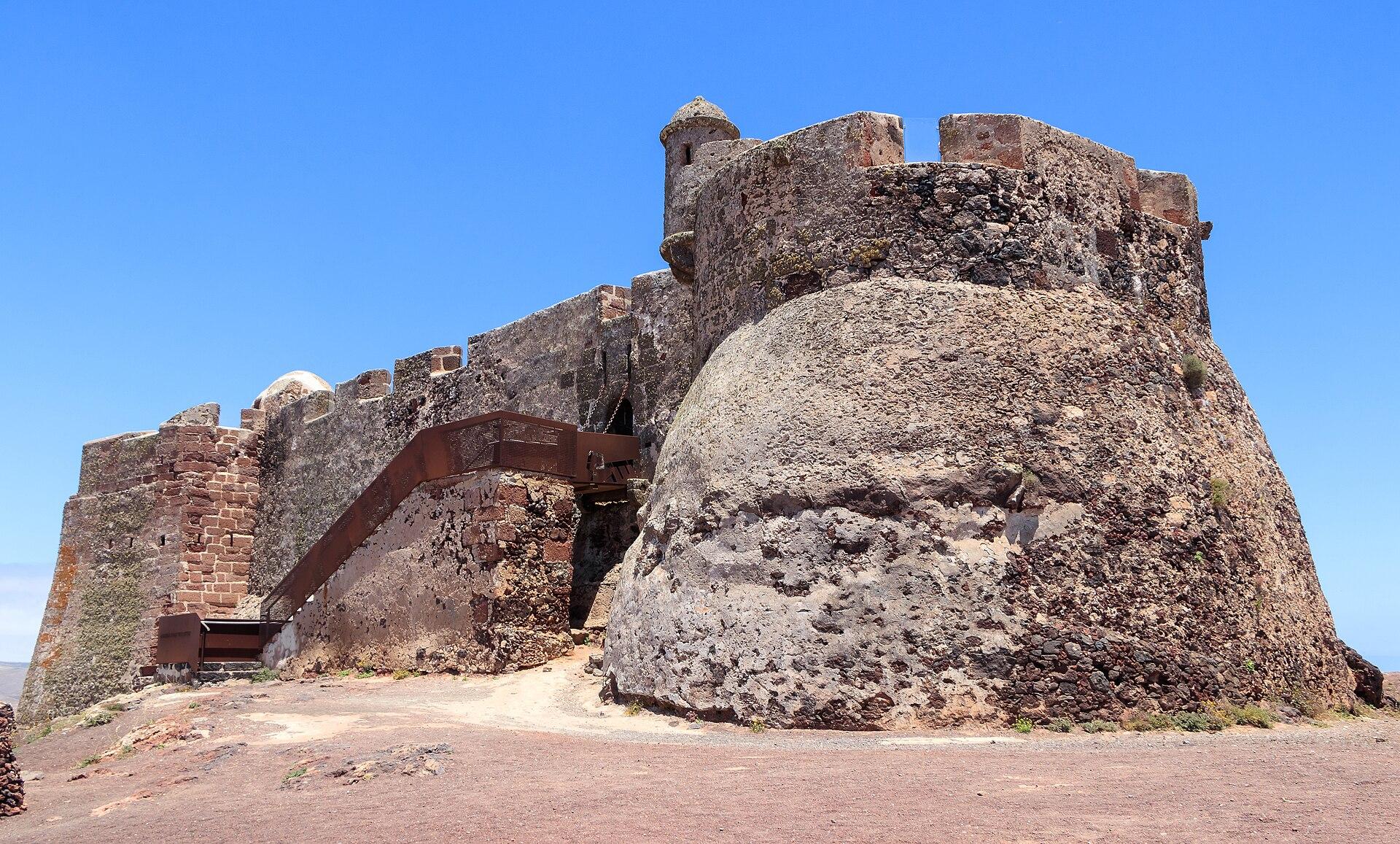
On the rim of an extinct volcano above the town stands a fortress that was once an early-warning tower against corsairs. Today it guards a very fitting treasure: the only museum of piracy in the Canary Islands.
Full story unlocks in the tour
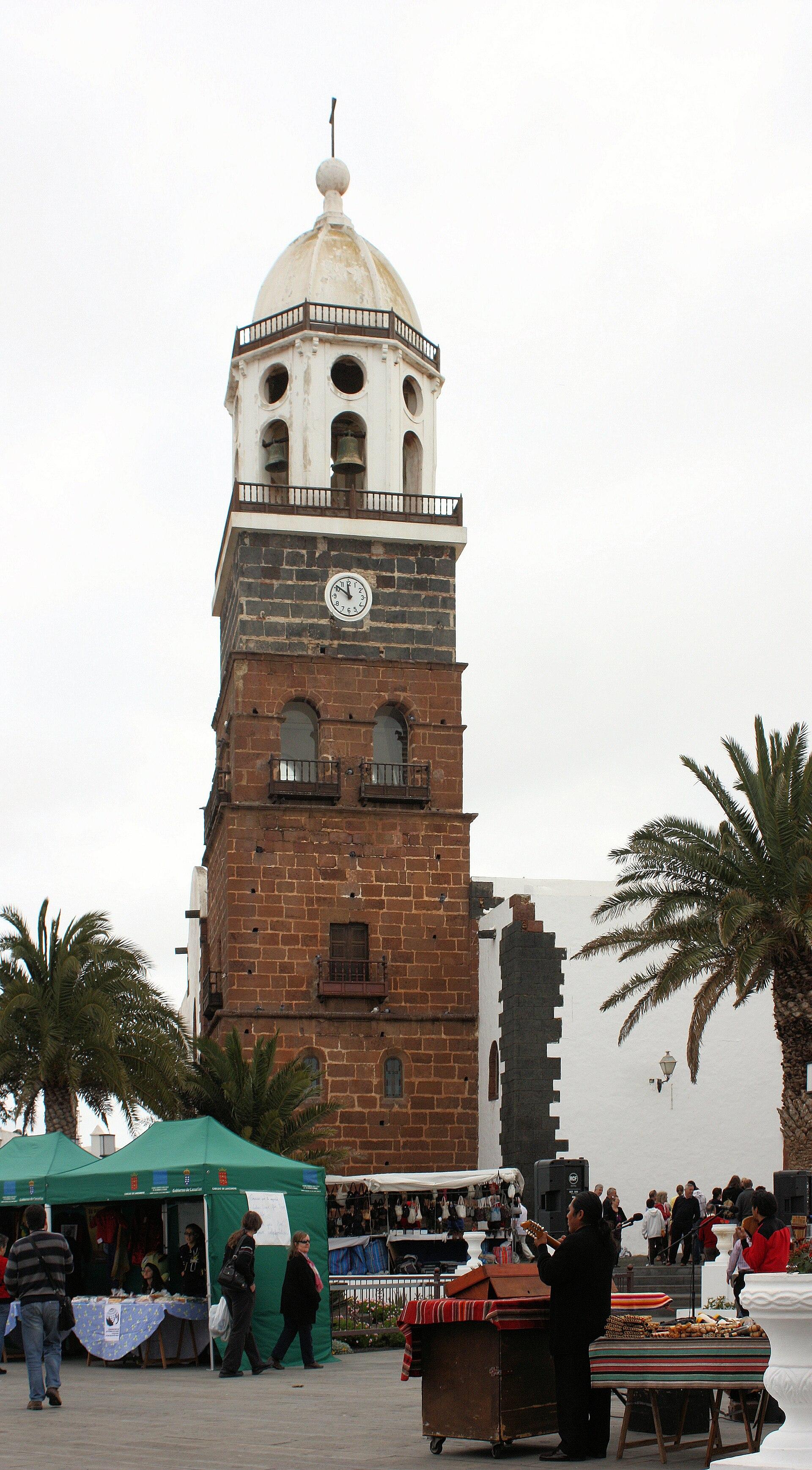
One narrow whitewashed lane behind the main church carries a chilling name, the Alley of Blood. Local memory ties it to a night when raiders came over the hills.
Full story unlocks in the tour
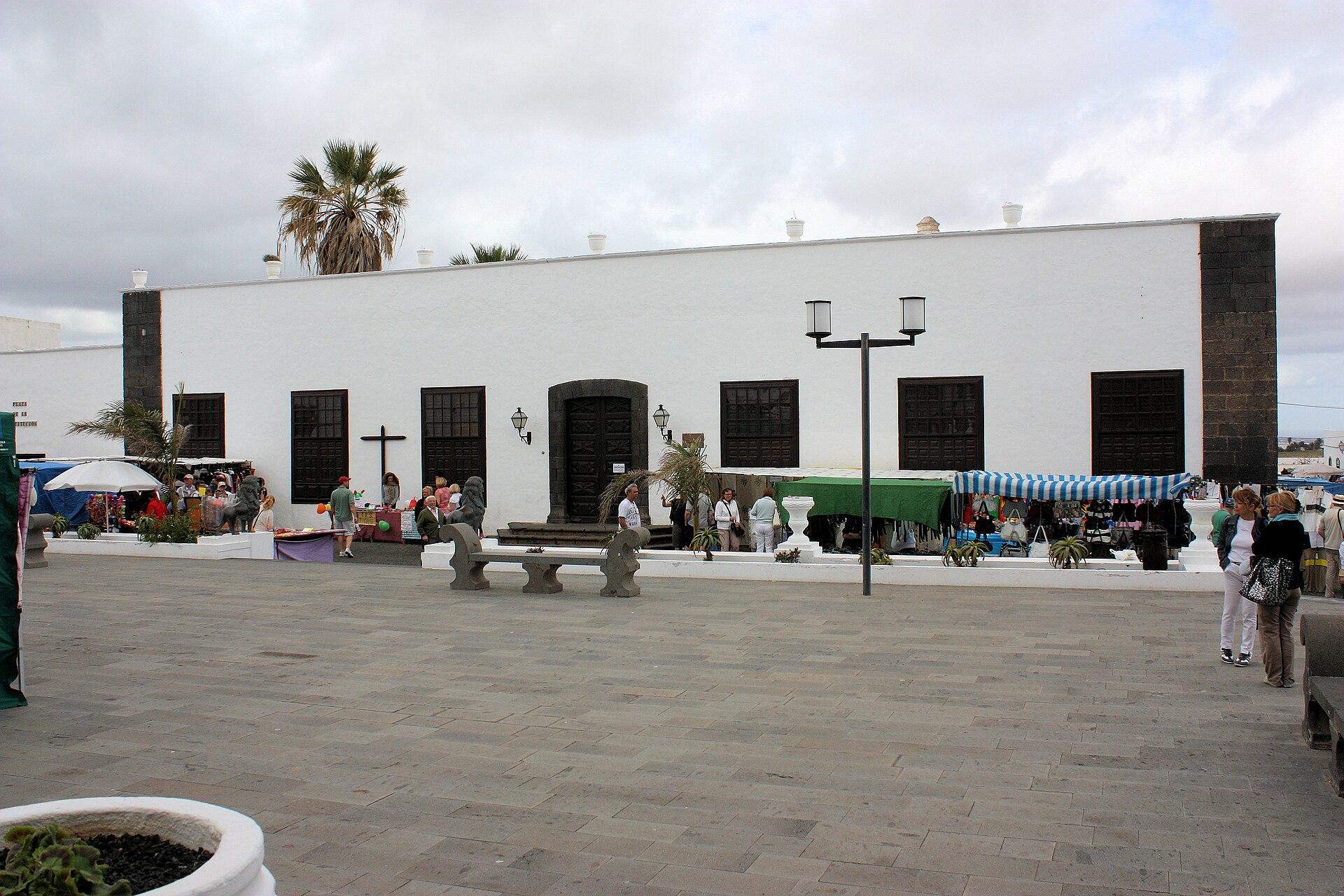
Behind an elegant eighteenth-century front on the main square hides the home of the timple, the little five-string instrument at the heart of Canarian music, which this town calls its own.
Full story unlocks in the tour
City Pass
Teguise: self-guided audio tour
Code valid 1 year · 12h once activated · offline
€12
€12 / code
Instant email delivery · activation code generated on purchase
Point your phone, follow the arrow, never get lost
The tour carries an augmented-reality guide. Lift your phone and the camera shows the street ahead with a glowing arrow laid over the real view, always pointing to your next stop. No map to decode, no wrong turns, and like everything here it runs completely offline once you have downloaded it.
- Start any time, any day. No fixed slot, no guide to meet, no queue.
- Native-voice narration in your language, one story unlocking at each stop.
- Download it once and it works fully offline, no roaming, no dead zones.
- A GPS route plus an augmented-reality arrow so you never take a wrong turn.
The story of Teguise
Teguise, often called the Villa de Teguise, is the old capital of Lanzarote and one of the oldest towns in the Canary Islands. It sits inland, away from the sea, a cluster of whitewashed houses and quiet squares beneath an extinct volcano. Its historic centre is among the best preserved in the archipelago, and on Sunday mornings its streets fill with one of the largest craft markets in the islands.
The town took shape in the early fifteenth century, after the Norman conquest of Lanzarote. By tradition it is named after Teguise, daughter of the island’s last aboriginal king Guadarfía, who is said to have married Maciot de Béthencourt, nephew of the conqueror. Historians treat the story as legend as much as fact, but the name has stuck for six centuries.
A capital built inland
For hundreds of years Teguise was the seat of Lanzarote’s government and church, deliberately set inland and out of sight of the sea. The reason was simple: the coast was raided again and again by corsairs, and a hidden inland capital was safer than a port. Only in the mid-nineteenth century did the island finally move its capital down to the growing harbour town of Arrecife.
The danger was real. In 1586 a fierce raid, remembered locally as the work of the corsair Morato Arráez, fell on the town, and islanders fled to the fortress on the hill. Local legend ties the grim name of the Callejón de la Sangre, the Alley of Blood, to the raids of this age. On the main square, the mother church of Nuestra Señora de Guadalupe has been damaged and rebuilt across the centuries.
The castle on the volcano
Above the town, on the rim of the Guanapay volcano, stands the Castillo de Santa Bárbara. It began as a simple fifteenth-century watchtower and was rebuilt as a fortress in the sixteenth century, a place where townspeople could shelter when the alarm was raised. After the pirate age ended it fell out of use, and for a time around 1899 it even served as a military pigeon loft before passing to the town.
Today the fortress holds the Museo de la Piratería, the only piracy museum in the Canaries, a fitting use for a building raised to watch for raiders. The climb is rewarded with a wide view over the island, the town below and the volcanic cones all around.
What to look out for
Wander the whitewashed lanes around the Plaza de la Constitución, with the church of Guadalupe and the old convents of San Francisco and Santo Domingo nearby. Step into the Palacio Spínola to find the Casa-Museo del Timple, dedicated to the small Canarian instrument this town is proud to call its own. Then climb to the Castillo de Santa Bárbara for the view and the pirate museum. Come on a Sunday and the famous market takes over the streets.
Where is Teguise?
Teguise lies inland in the north of Lanzarote, the most north-easterly of Spain’s Canary Islands, off the north-west coast of Africa. It is a short drive from the capital Arrecife and from the resort of Costa Teguise on the coast, which shares its name but is a separate, modern place.
Three things most visitors never learn
- The castle became a pigeon loft. Once the pirate threat faded, the mighty watchtower on the volcano lost its purpose. Around 1899 it was turned into a military pigeon loft, a strange second life for a fortress, before the town took it over and made it a museum.
- A princess may have named the town. By tradition the name Teguise comes from an aboriginal princess, daughter of the island’s last native king, said to have married the conqueror’s nephew. Historians are not sure the marriage ever happened, but the name has outlived every doubt.
- The cradle of the timple. The timple, the small five-string instrument that gives Canarian folk music its bright, jangling sound, is traditionally said to have been born in Teguise. The town now guards its story in a museum inside an old noble house.
Teguise in your language, all 32
Korean, Chinese, Hebrew and 29 more, every stop narrated by a native speaker. One of the widest language choices of any self-guided audio tour.
Get the key to Teguise
Pick your stops, start walking, and let the voice reveal what everyone else walks straight past.
City Pass
Teguise: self-guided audio tour
Code valid 1 year · 12h once activated · offline
€12
€12 / code
Instant email delivery · activation code generated on purchase